The intake system has two major restrictions: the subthrottle plate and the narrow snorkel. Addressing both unlocks significant power.
Subthrottle Removal
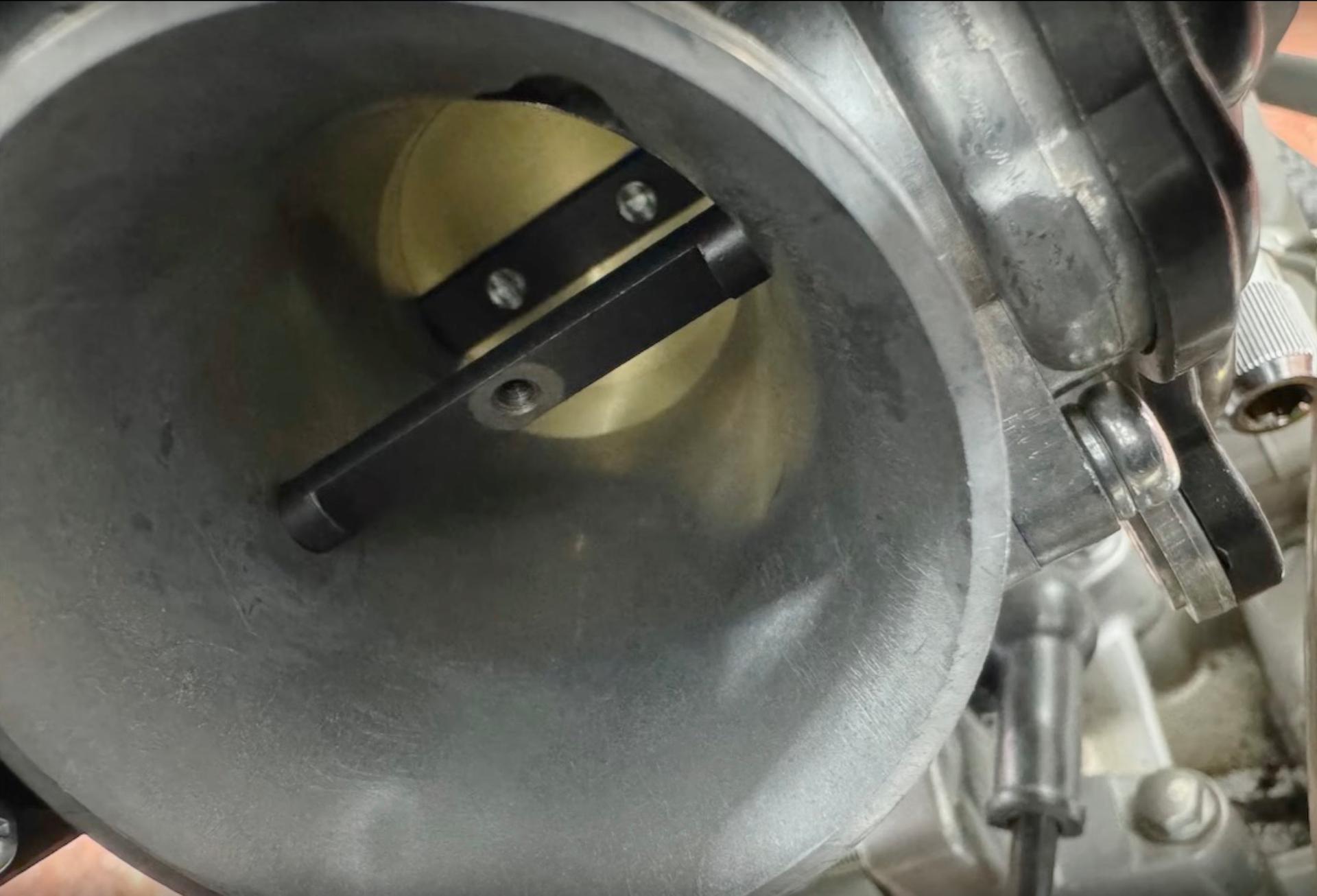
The electronically controlled secondary throttle plate is one of the first restrictions on engine performance. The ECU limits its opening even when the main throttle is fully open. We decoded the factory maps that command it — see the secondary throttle plate deep-dive for exactly how much airflow it withholds.
Removal Process
- Access the throttle body (may require removing some bodywork)
- Using a JIS screwdriver, remove the screws holding the secondary throttle plate
- Many instructional videos available on YouTube for visual guidance
Important: Idle Stability
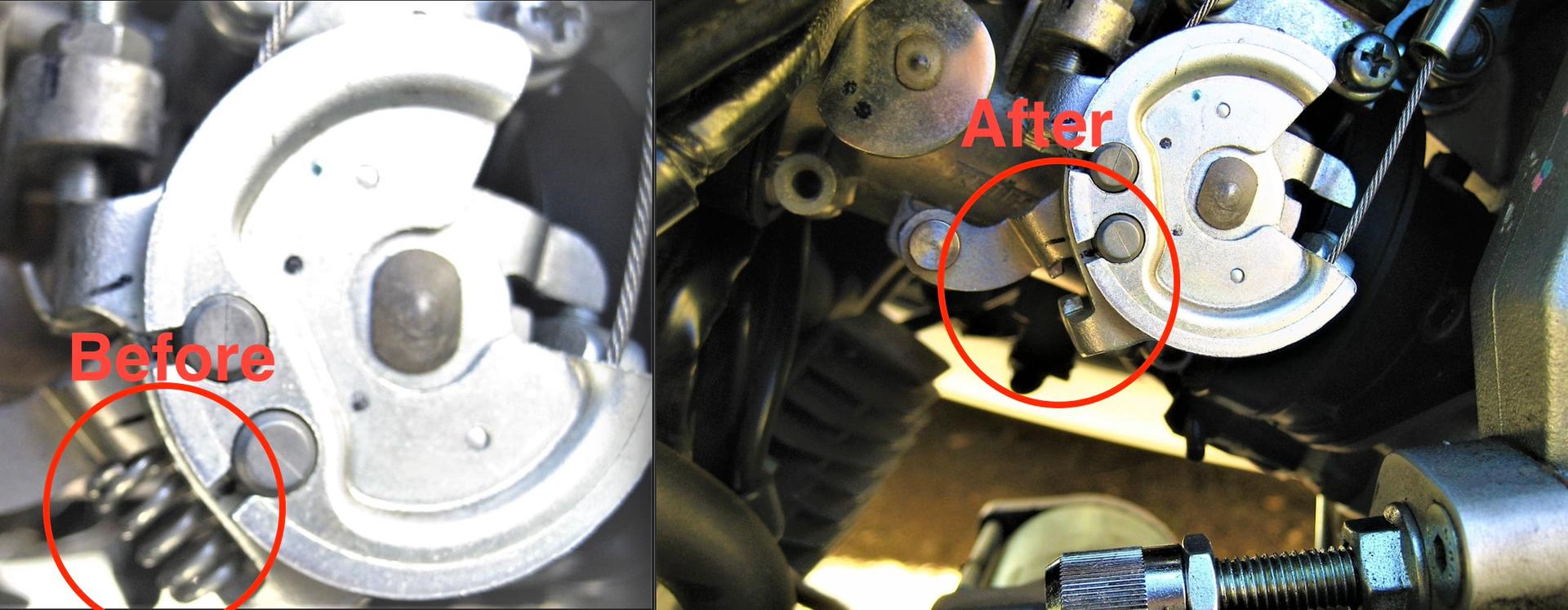
Removing the subthrottle plate can cause unstable idle. The ECU controls idle speed with a small rocker arm connected to the throttle plate.
Fix: Remove the spring inside the throttle body to prevent high or erratic idle RPM.
Performance Gains
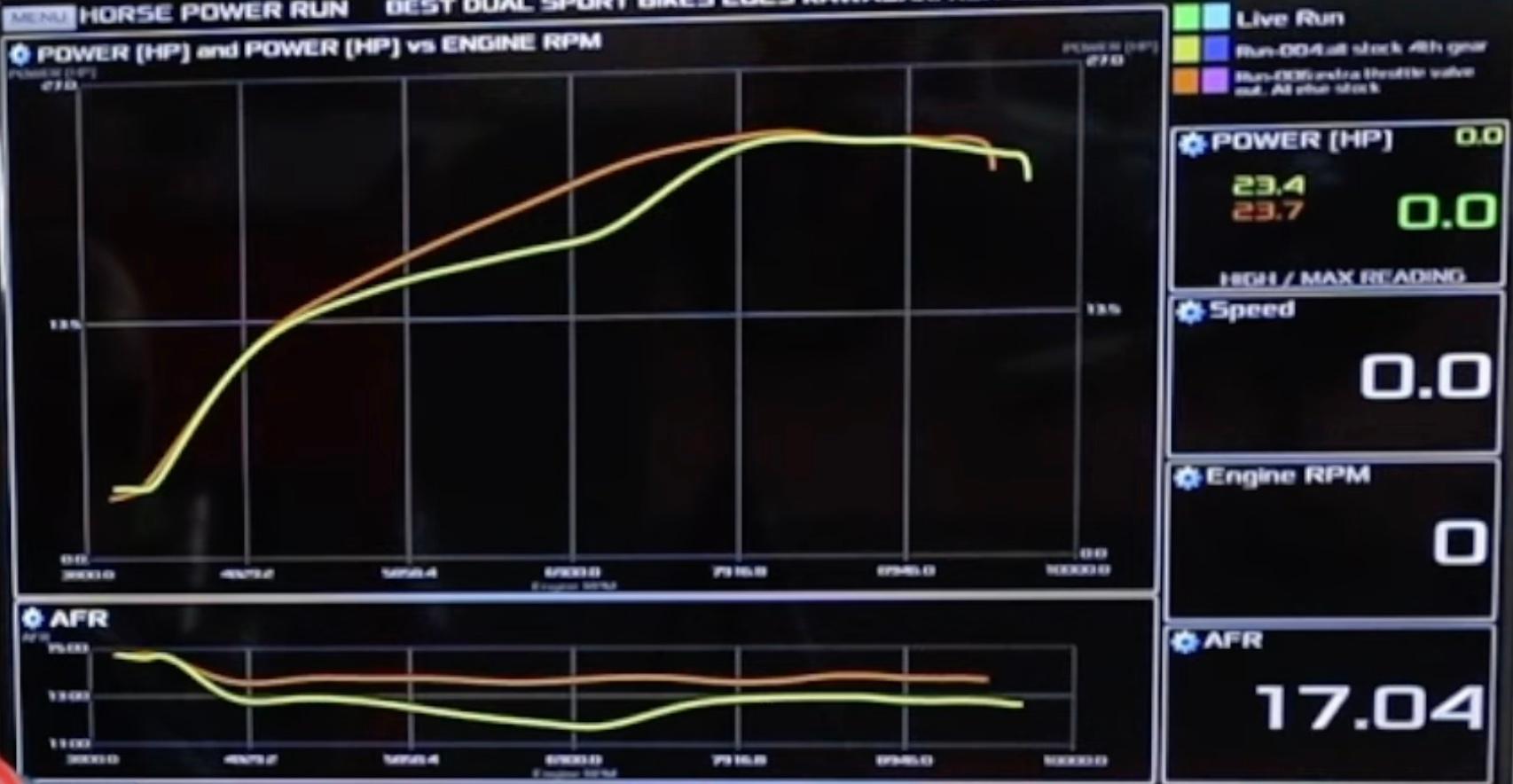
Removing the subthrottle plate alone provides:
- Noticeable improvement in throttle response
- ~4 hp increase in midrange on KLX300
Airbox & Snorkel Options
The stock snorkel has limited cross-sectional area. Three main options:
Option 1: KDX Snorkel
The most popular budget option is the "KDX snorkel" (OEM part number 14073-1577) from a Kawasaki KDX220 2-stroke dirt bike. Available used on eBay for ~$30.
Benefits:
- Doubled airflow capacity vs stock
- Bolt-on compatibility
- No excessive intake noise ("roaring")
- Noticeable midrange power increase
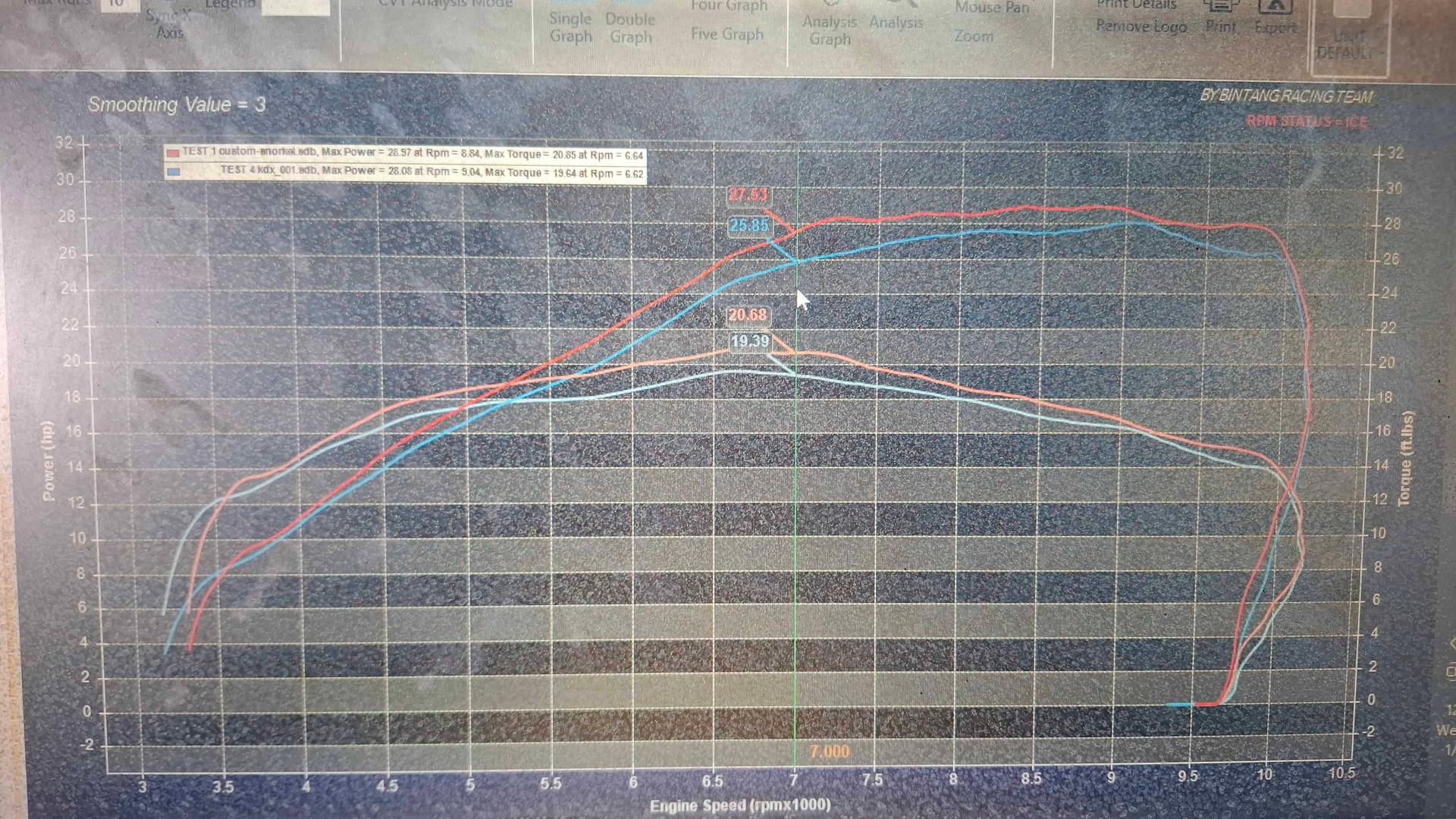
Dyno Results:
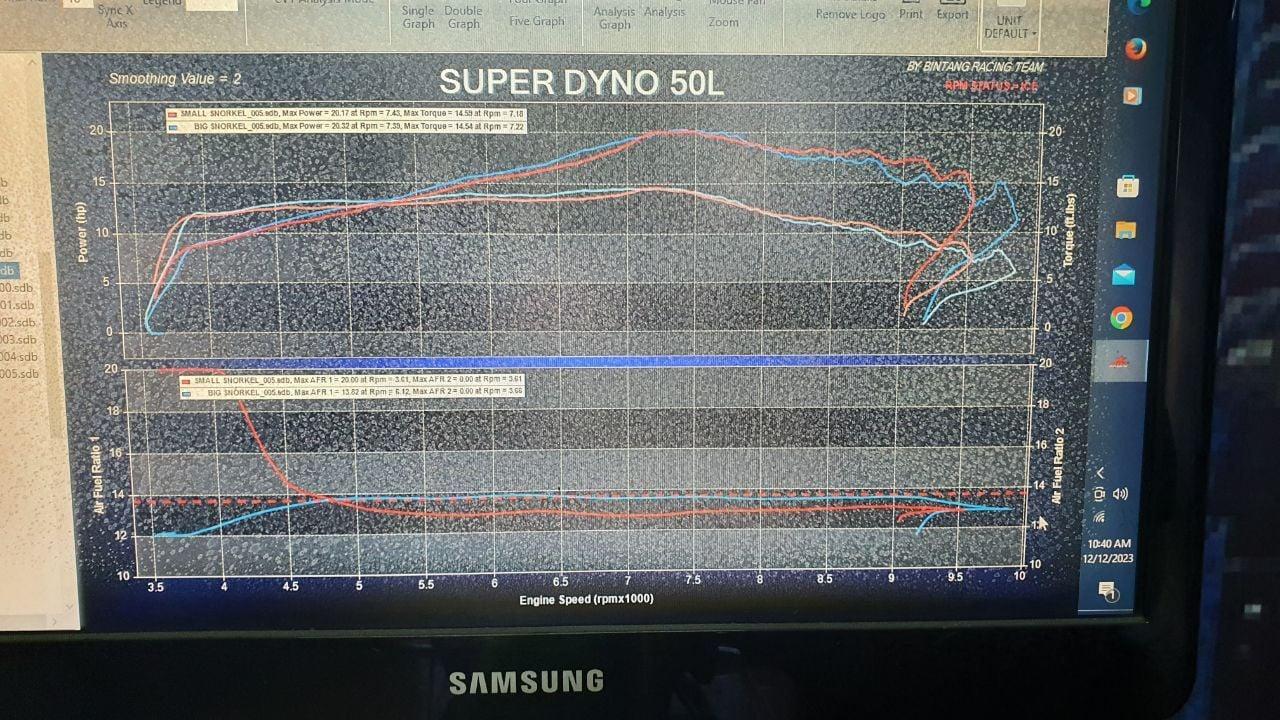
Limitations: Still restricted compared to open airbox options. The KDX snorkel was designed for a 220cc 2-stroke, not a 300cc 4-stroke.
Option 2: Open Airbox (Lidless)
Removing the airbox cover entirely maximizes airflow. This is the highest-flow option and produces the most power:
| Setup | Peak Power |
|---|---|
| KDX snorkel + modified stock exhaust | 25 hp |
| KDX snorkel + full performance exhaust | 26.5 hp |
| Open airbox + performance exhaust | 28.5 hp |
Open airbox provides +2 hp and +2-3 Nm of torque across the entire RPM range vs KDX snorkel.
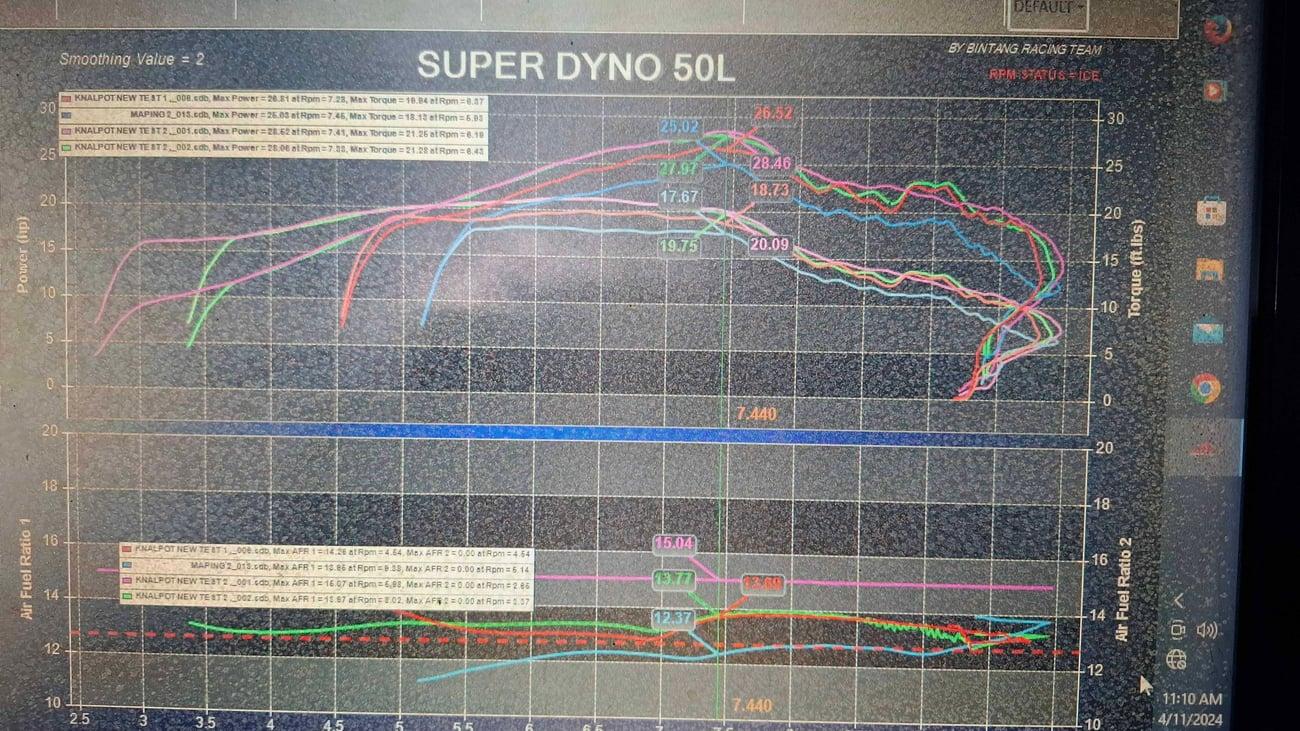
Major Trade-off - NOISE: Open airbox produces significant intake noise ("roaring" sound) that many riders find unacceptable for street or trail riding. This is the primary reason people revert to snorkel options despite the power loss.
Option 3: PlanetKLX2 High-Flow Snorkel
We developed a custom airbox lid with integrated high-flow snorkel after dyno testing showed the KDX option provides 2 hp less than open airbox.
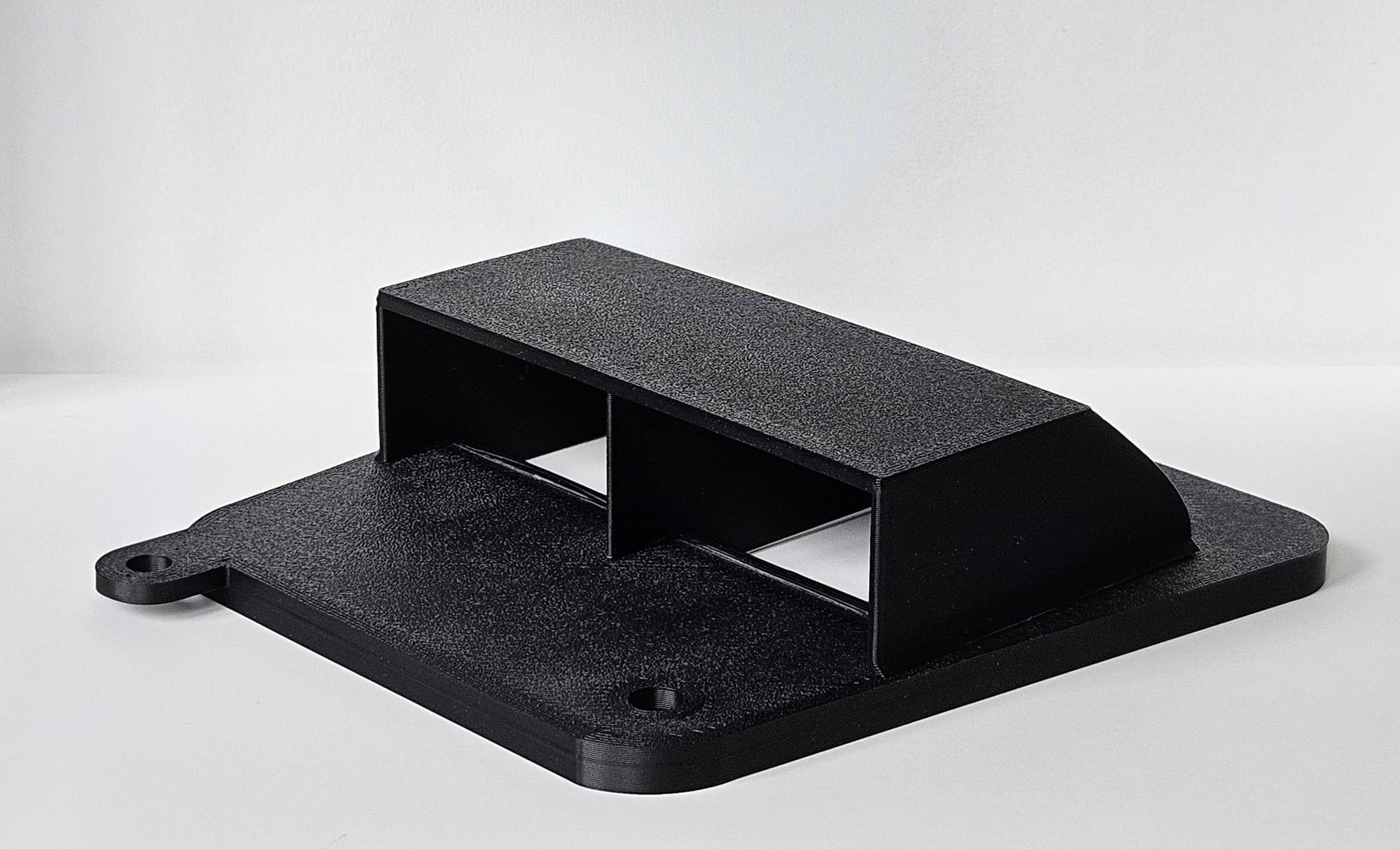
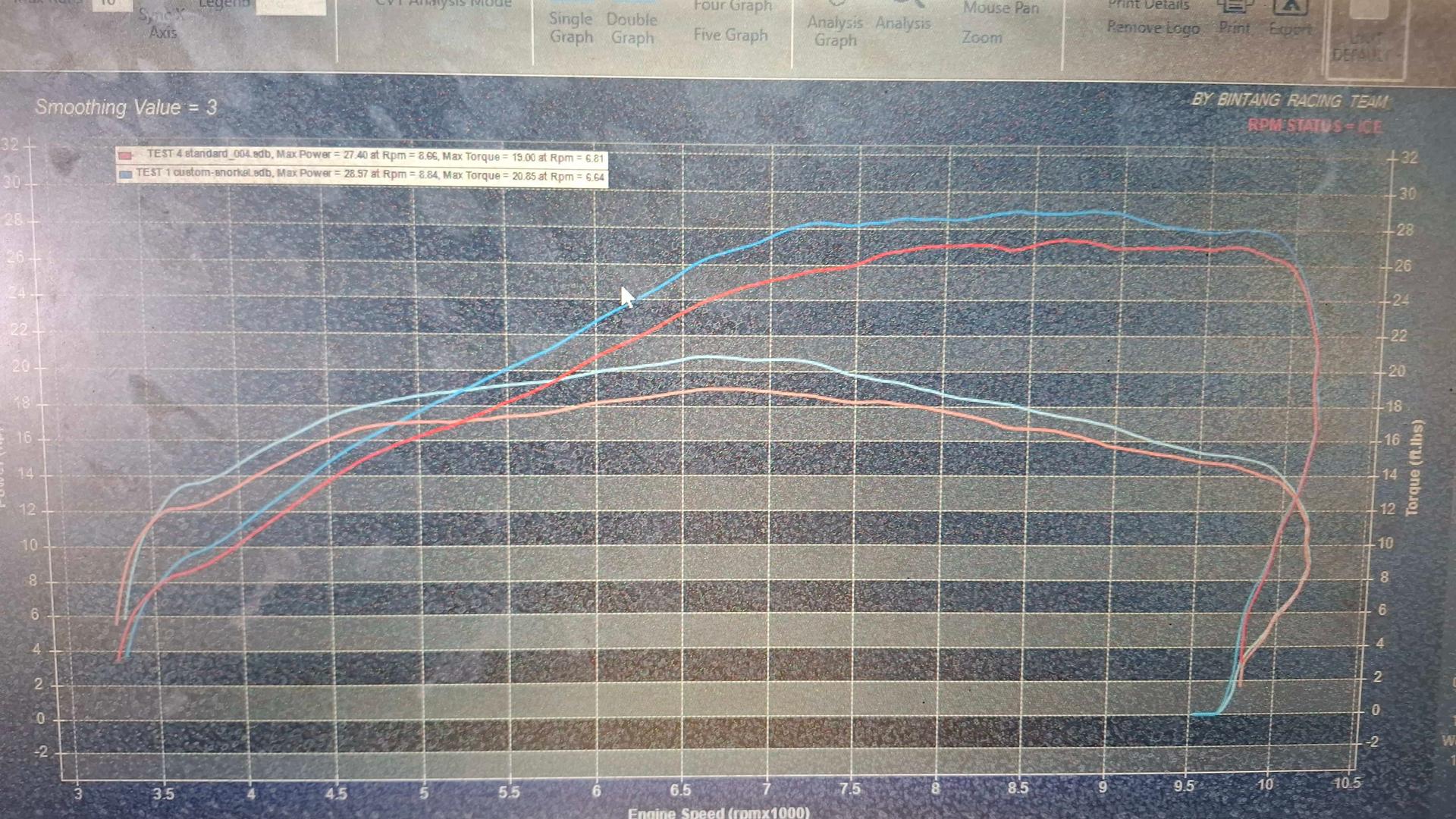
Dyno-tested gains:
vs Stock snorkel:
- +2.5 hp peak
- +2-3 Nm torque
vs KDX snorkel:
- +2 hp peak
- +2-2.5 Nm torque
Key advantage: Matches open airbox power while maintaining stock noise levels. The snorkel design allows maximum airflow without the intake roar.
Available in shop - $45.
Installation Tips
Tools needed:
- Silicone gasket sealer
- Screwdriver or socket for mounting bolts
- Thread lock (blue Loctite recommended)
Steps:
- Apply thin layer of silicone gasket sealer around edge
- Position lid on airbox and press down firmly
- Listen for "click" - indicates proper seating in the groove
- Verify mounting holes align (drill slightly larger if needed)
- Install bolts with moderate torque only - do not over-tighten
Critical: The lid must "click" into place. If it sits too high, it will interfere with the seat.
If seat interference occurs: Loosen all 3 airbox mounting bolts, push airbox down into correct position, re-tighten.
Installation video:
Snorkel Comparison Summary
| Setup | Peak HP | Noise | Cost | Notes |
|---|---|---|---|---|
| Stock snorkel | baseline | Low | $0 | Most restrictive |
| KDX snorkel | +1-2 hp | Low | ~$30 used | Popular budget option |
| Open airbox | 28.5 hp | HIGH | Free | Maximum power, significant noise |
| PlanetKLX2 | 28+ hp | Low | $45 | Best power-per-dollar, quiet |
Airbox & Velocity Stacks
There are two generations of KLX airboxes with different performance characteristics.
Modern Airbox
Used on fuel-injected KLX250/300.
Characteristics:
- Plastic duct connecting to throttle body
- Abrupt edges on duct inlet (not aerodynamically efficient)
- Mount for air temperature sensor
- Designed for emissions compliance, not peak performance
Older KLX300R Airbox
Used on older KLX300R/KLX250R.
Characteristics:
- Flexible rubber duct with aerodynamic shape
- Better airflow characteristics
- Less intake noise
- Factory spec: 30+ horsepower
Compatibility: Older airbox bolts directly onto newer bikes.
Modifications needed:
- Air temperature sensor: Zip-tie near airbox (older airbox has no mount)
- Crank ventilation hose: Minor adjustment
Cost: ~$30-50 USD on eBay (cheap performance upgrade)
Velocity Stack Option
Aftermarket velocity stacks improve airflow into the throttle body. Results from Thai manufacturer (KS PPP):
| Setup | Power |
|---|---|
| Stock | ~26-29 HP |
| With velocity stack | Gains from 5,000 RPM |
The older airbox's duct design provides similar benefits to a velocity stack at lower cost.
Velocity Stacks Video
Fuel Tuning Required
Warning: Intake modifications lean out the air-fuel mixture. The stock ECU can compensate partially in closed-loop mode, but open-loop conditions (WOT) require additional fuel.
Running too lean can cause detonation and engine damage. Always add fuel when increasing airflow.
See ECU Tuning for fuel management options.
Video Reviews
Part 1 - Intake Overview:
Part 2 - Dyno Results:
Recommended Path
For best results with minimal noise:
- Remove subthrottle plate (free)
- Install PlanetKLX2 snorkel or KDX snorkel
- Add fuel controller (PCFC or EJK, interim solution)
For maximum power:
- Remove subthrottle plate
- Open airbox or use PlanetKLX2 snorkel
- Add fuel controller (PCFC or EJK, interim solution)
- Performance exhaust
Coming Soon: Purpose-built fuel tuner for the KLX platform in development. Subscribe below for updates.
Related
- Engine Guide - Overview of all performance modifications
- ECU Limitations - Why subthrottle exists
- ECU Tuning - Fuel management options
- Shop - PlanetKLX2 high-performance snorkel